Every blue box on a scan is one photo that will be exported as its own file. AutoCropper draws the boxes for you, and most of the time they are right, but a box can be a little tight, a little loose, crooked, missing or extra. This page is the how-to for fixing them: on the canvas for quick changes, and in the Advanced Crop Editor for precise ones. For a map of every button, see the user interface.
Nothing you do here changes your original files. Every change can be undone with Ctrl+Z (Cmd+Z on a Mac), with two exceptions noted below.
On the canvas#
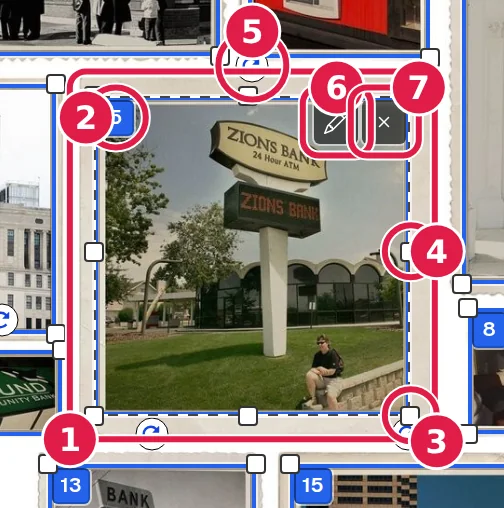
- Selected crop. Click a crop to select it, then drag anywhere inside it to move it.
- Position number. The crop's place in reading order and the number in its file name.
- Corner handle. Drag to resize. Hold Shift to keep the box's shape.
- Edge handle. Drag one side in or out. Edge handles appear when you hover or select the crop.
- Rotate grip. Drag to rotate the box around its centre.
- Edit photo. Opens the crop in the Advanced Crop Editor.
- Delete crop. Deletes the crop.
Add a crop AutoCropper missed#
Drag on any empty part of the scan, outside the existing boxes. A new box is drawn as you drag and selected when you let go. On a touch screen, press Add crop at the bottom right of the canvas first.
For a photo scanned at an angle, the 4-Point tool is faster: press it in the toolbar, or press C, then click the photo's four corners. The fourth click creates a box that is already rotated to fit. Backspace takes the last corner back, and Esc leaves the tool.
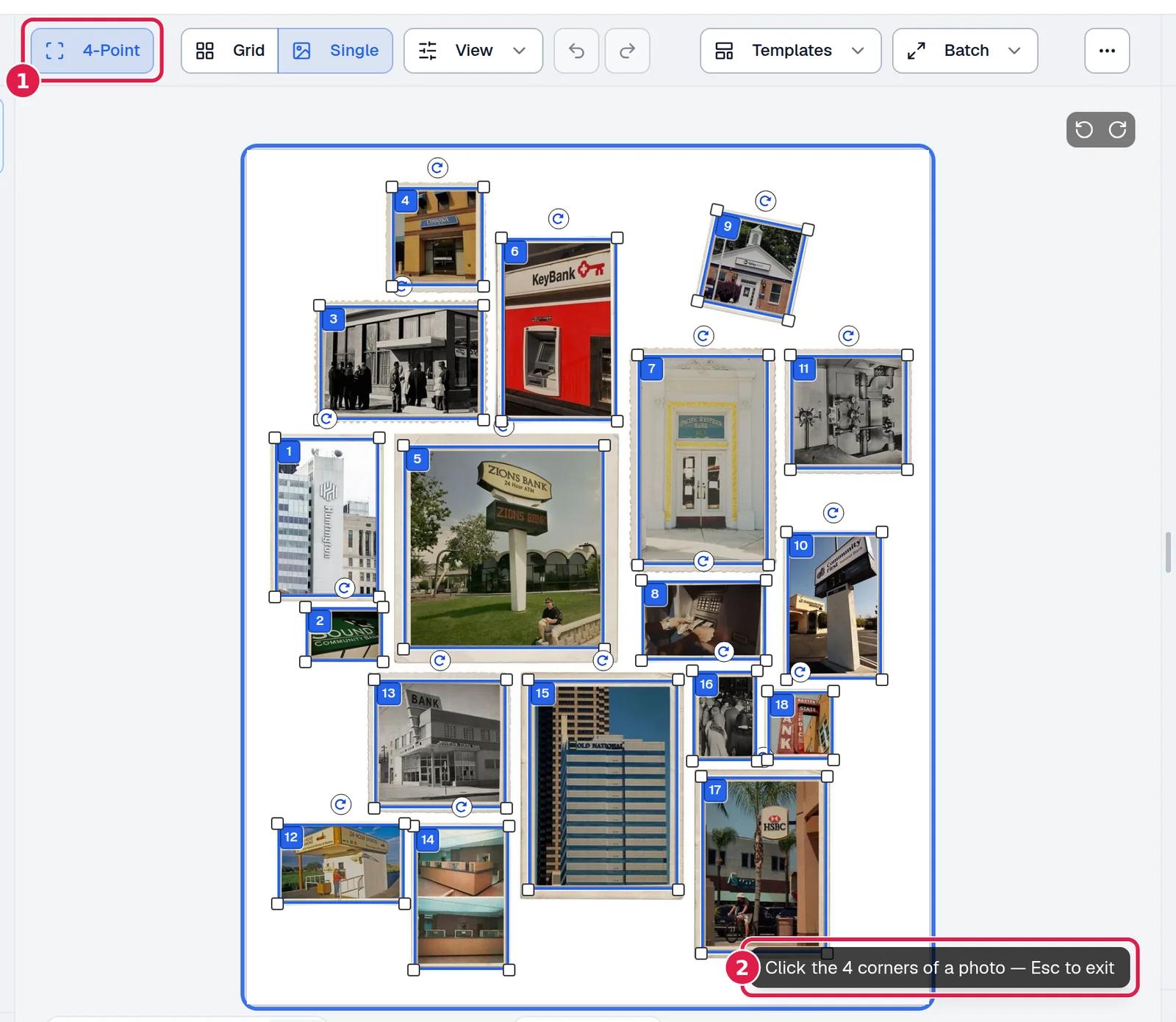
- 4-Point, armed. The button stays highlighted while the tool is on.
- Hint. Counts the corners as you click them.
You can also copy crops: select one or more, press Ctrl+C, open another scan and press Ctrl+V. A crop pasted onto another scan is scaled to that scan's size; pasted onto the same scan, or made with Duplicate, it lands slightly down and to the right of the original.
Make a crop tighter or looser#
Drag its edges or corners on the canvas. To change every crop at once, use the toolbar's Batch menu: Expand all crops (+2%) and Shrink all crops (−2%) apply to the current scan in Single view and to every scan in Grid view. To leave the boxes alone and widen only what is exported, set a Capture margin in the Export dialog; see exporting crops.
Straighten a crooked photo#
There are four ways, from quickest to most precise:
- Straighten in the right sidebar's Crop options panel removes the tilt and keeps the photo the right way up.
- The rotate grip above the box on the canvas: drag it until the photo's edges are level. With Rotation snap on, the angle snaps to straight when you are within about 1.5 degrees, and to a quarter turn within about 4.5.
- 4-Point draws a new, already straight crop from the photo's four corners; delete the old one.
- The Tilt strip in the Advanced Crop Editor turns the crop a fraction of a degree at a time; see below.
To turn a photo that is sideways or upside down, use the turn left and turn right buttons in Crop options or on its tile in Extracted images. These turn the photo inside the box without moving the box.
The right-click menu#
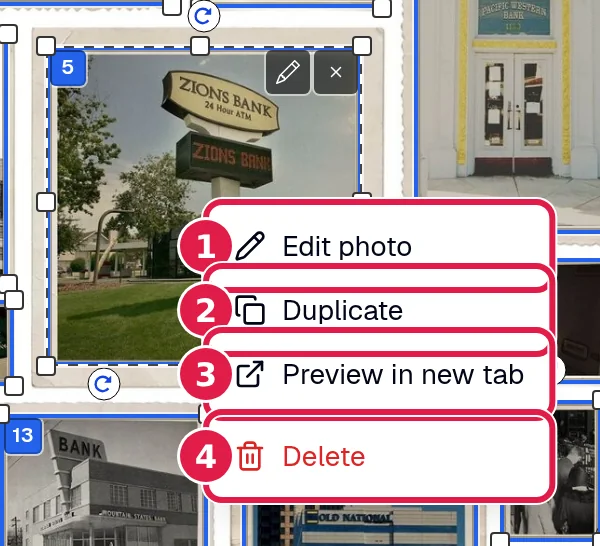
- Edit photo. Opens the Advanced Crop Editor.
- Duplicate. Copies the crop.
- Preview in new tab. Shows the photo as it will export, at full resolution.
- Delete. Deletes the crop.
In the Advanced Crop Editor#
The editor shows one crop at a time, large, with the scan around it. Open it by double-clicking a crop, with Edit photo on the crop or in the right-click menu, with Edit Photo in the toolbar, or from a tile in Extracted images.
In the editor:
- Drag inside the box to move it, and drag its corners or edges to resize it.
- Drag the photo outside the box, or the dark area around it, to pan the view. Space and drag pans from anywhere.
- Scroll or pinch to zoom the view in and out around the pointer. Zooming never changes the crop. Press 0 to fit the photo back.
- [ and ] shrink and grow the crop by one pixel on every edge, ten with Shift.
- Left and Right step to the previous and next crop, carrying on to the next scan at the end of this one. Shift with Left or Right steps between scans.
- Ctrl+Z and Ctrl+Shift+Z undo and redo inside the editor. Moving the view is not an edit and is not undone.
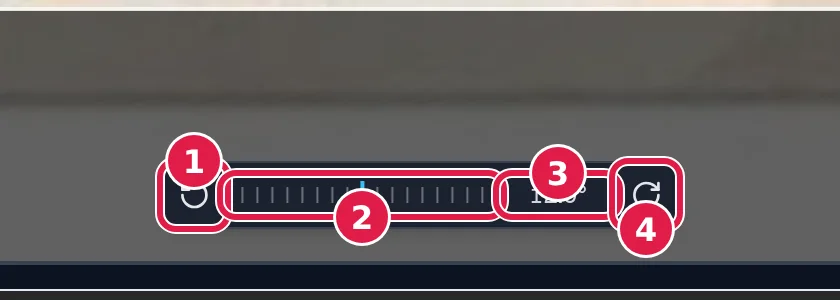
- Rotate 90 degrees left. A quarter turn counter-clockwise.
- Tilt strip. Drag left or right to tilt the crop by fractions of a degree. This is the precise way to straighten.
- Angle. The current angle. Double-click it to set it straight.
- Rotate 90 degrees right. A quarter turn clockwise.
Saving, and going back#
The editor saves as you go: with Auto-save changes on, which is the default, every edit is kept, and closing the editor any way you like (Close, Esc, the X or a click outside) keeps your changes. Changes saved from the editor go into the main undo history, so Ctrl+Z after you close it takes them back.

- Reset. Appears once you change something, and puts the crop back the way it was when you last saved. It is different from undo, which steps back one edit at a time.
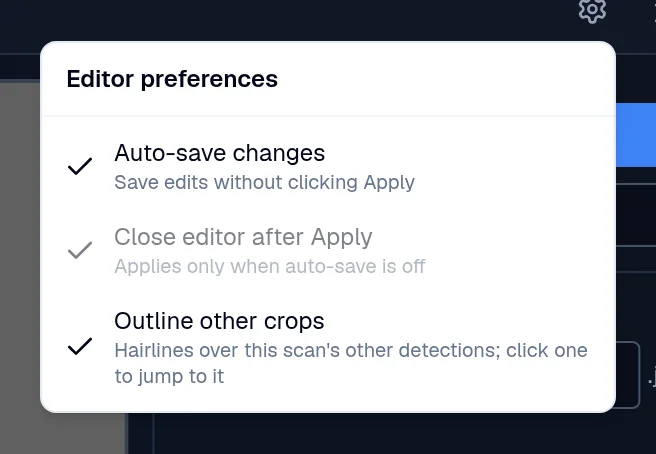
Behind the gear at the top right, Editor preferences has three switches. Turn Auto-save changes off to review edits first: the panel then shows Apply Changes and Cancel, an Unsaved badge appears when you have changed something, and closing without Apply throws the changes away. Close editor after Apply then closes the editor when you apply. Outline other crops draws the scan's other crops as faint outlines; click one to jump to it. The same switches are on the Editor tab of Settings.
Deleting, and getting crops back#
Select a crop and press Delete or Backspace, use Delete crop on the box, or Delete in the toolbar or the right-click menu. Several selected crops are deleted together.
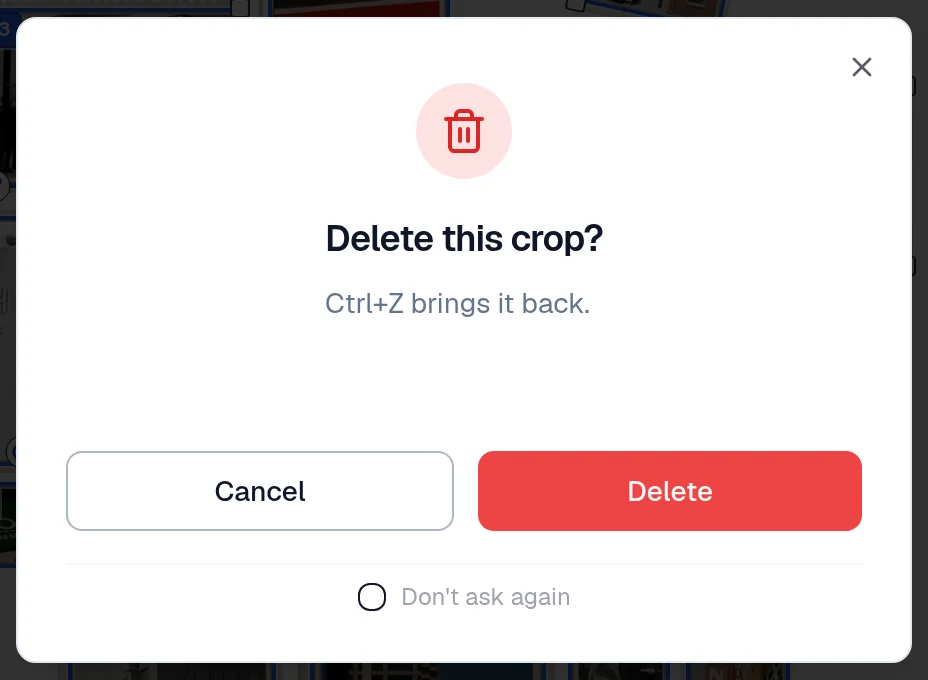
Don't ask again skips this question from then on. For a crop that belongs to a synced group, the question offers Delete just this one or Delete group. On a phone there is no question: the crop goes at once, and a message with Undo appears.
To clear many crops, use Batch, then Clear crops, with nothing selected:
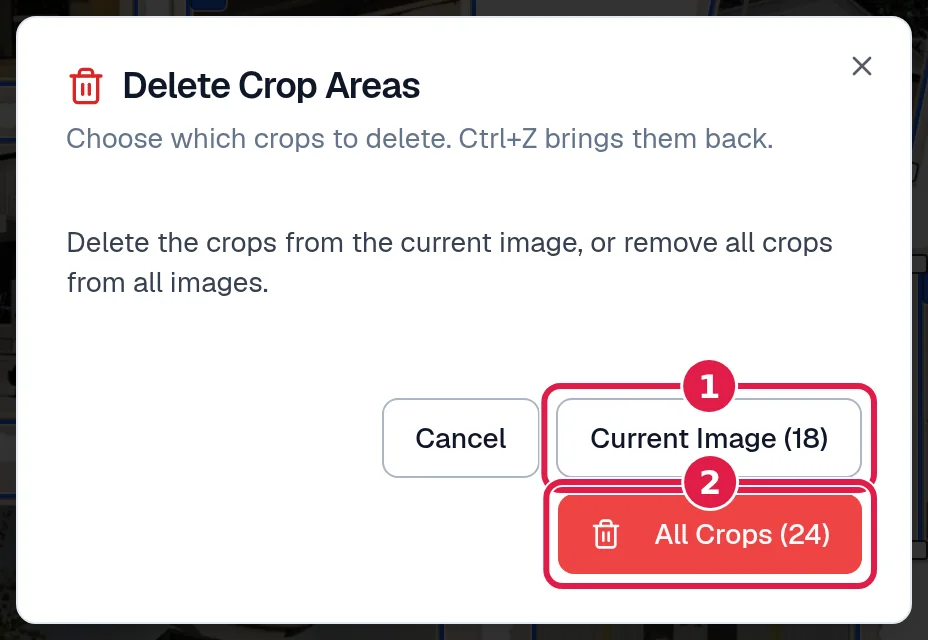
- Current Image. Deletes every crop on the scan you are looking at.
- All Crops. Deletes every crop in the batch.
Every deletion, a single crop or all of them, comes back with Ctrl+Z. The history holds the last 50 changes. It covers drawing, moving, resizing, rotating, deleting, clearing, pasting, duplicating, 4-Point crops, the Batch expand and shrink, the toolbar's Sync and changes saved from the editor. Two changes cannot be undone: Unlink, and Sync all crops across scans from the Batch menu.
One crop on every scan: synced crops#
When every scan has the same layout, for example a stack of slides or a run of album pages, draw the crop once and sync it. Select the crop and press Sync in the toolbar.
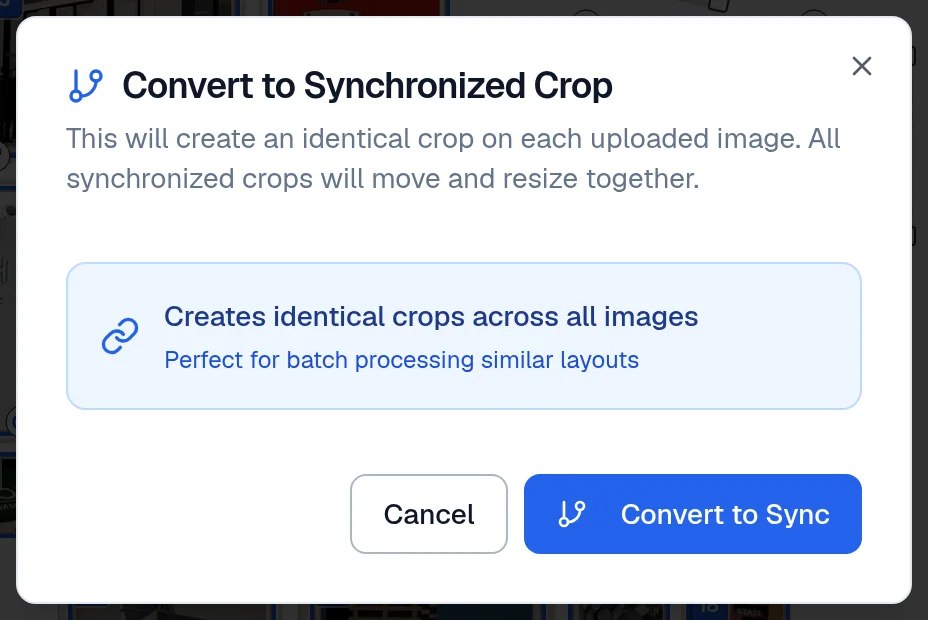
Convert to Sync places a copy of the crop on every other scan, scaled to that scan, and links the copies: move or resize one and the others follow. Synced crops carry a small link badge beside their number, and clicking one selects its whole group. To sync several crops at once, select them on one scan first; to sync every crop on the current scan, use Batch, then Sync all crops across scans. To free one scan's copy, select it and press Unlink, or choose Unlink from sync group in the right-click menu. A scan whose crops are synced cannot be rotated until they are unlinked.
Numbers and names#
The number on each crop is its place in reading order: rows from top to bottom, and left to right within a row, where two crops are in the same row when they overlap by more than half their height. The numbers update when you add, move or delete a crop, and they are the numbers in the exported file names, so the fifth photo on vacation.jpg exports as vacation_5.jpg.
To give a photo its own name, type it in the Name field of the Crop options panel, or the file name field in the editor. A typed name wins over the automatic one, follows the photo if the numbers change, and becomes the photo's title in its metadata; clear the field to go back to the automatic name. In the editor, Enter keeps the name and moves to the next photo, ready for the next one. More naming options, such as numbering across the whole batch, are in the Export dialog.
On a phone#
Tap a crop to select it, and use the bar at the bottom: Edit opens the editor, Delete removes the crop, and Done deselects. Press Add crop before drawing a new one. In the editor on a phone the frame stays still and you move the photo under it: drag to move, and pinch with two fingers to change the crop's size.
Questions#
How do I straighten a crooked photo?#
Select it and press Straighten in Crop options, or drag the Tilt strip in the editor. For a photo that is badly askew, draw it again with the 4-Point tool.
I deleted crops by mistake. Can I get them back?#
Yes. Press Ctrl+Z (Cmd+Z on a Mac), or the undo arrow in the toolbar, as many times as you need.
Did my changes save when I pressed Esc in the editor?#
Yes, with Auto-save changes on, which is the default. With it off, only Apply Changes saves.
Why does scrolling in the editor zoom instead of resizing the crop?#
The scroll wheel moves the view so you can look closely without changing anything. Resize with the box's handles, or with [ and ].
Why did my crop numbers change?#
They follow reading order on the scan, so moving, adding or deleting a crop renumbers the others. Give a photo its own name if it must keep one.