How to use AutoCropper
Scan several photos at once, upload the scans, and get every photo back as its own straightened, cropped file. Three steps, nothing to install. Here is the whole workflow with a real batch of scans.
The demo loads sample scans, so you can try everything without uploading a thing.
The whole workflow, in three steps
Scan several photos at once
Lay 3–5 photos on your flatbed with a small gap between them and make one high-resolution scan of the whole bed. Swap in the next batch and repeat. Don't stop to crop anything, and don't fuss over alignment. Straightening happens later, automatically.
Do
- Leave a finger-width of space between photos
- Scan at 300–600 DPI in one pass per scanner bed
- Keep scanning batch after batch and crop nothing by hand
Don't
- Let photos touch or overlap on the glass
- Use your scanner software's auto-crop or preview scans
- Waste time aligning photos perfectly straight
Deciding between a scanner, your phone, or a scanning service? The scanning tips guide compares them and covers DPI settings in depth.
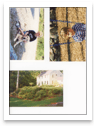 scan1.jpg
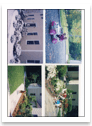 scan2.jpg
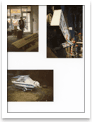 scan3.jpg
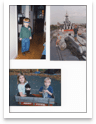 scan4.jpg
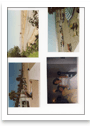 scan5.jpg
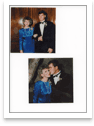 scan6.jpg
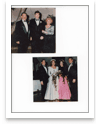 scan7.jpg
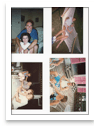 scan8.jpg
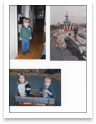
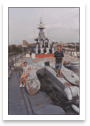
A real scanning session: eight scans, each holding a few photos. This exact batch feeds the rest of this guide.
Upload the whole batch
Drag your scans into the AutoCropper editor. Use JPEG, PNG, TIFF, iPhone HEIC, or a PDF of scans, where each page counts as its own scan. Within a few seconds, AutoCropper finds every photo and draws an adjustable blue box around it.
Then look over the boxes it found. Drag one to move it, pull a corner to resize, rotate it, or draw a box yourself if a photo was missed. Most clean scans need no fixes at all, but nothing is exported until you've seen every box, so you always get the final say.
See it happen on real scans
The demo opens the editor preloaded with sample scans, so you can watch the boxes appear without uploading anything.
The free plan covers 5 images a day, enough to run a real batch and judge the results yourself.
Export every photo at once
Click Export. Every box is cut from your original scan at full resolution, straightened, and saved as its own JPEG or PNG, named after the scan it came from (scan4_1.jpg, scan4_2.jpg, …), so photos stay traceable to their source scan. The whole batch downloads together as a single ZIP, named after AutoCropper and the date, to your browser's Downloads folder.
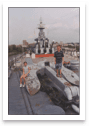

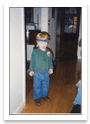
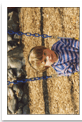
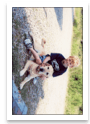
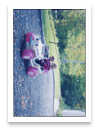
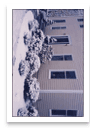
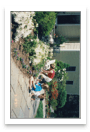
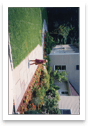
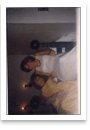
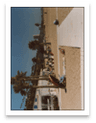
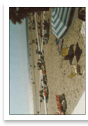
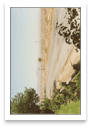


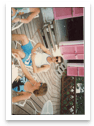
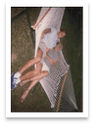
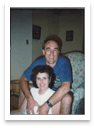

The payoff: those 8 scans became 25 individual photos, without cropping a single one by hand.
Will my scans work?
Almost certainly. AutoCropper is built for exactly the messy, mixed-up batches a real scanning project produces.
Any common format
JPEG, PNG, TIFF, iPhone HEIC/HEIF, and PDF are all accepted. Each page of a PDF is treated as its own scan.
Tilted photos are fine
Photos laid down at an angle come out straightened automatically, and you can fine-tune any angle by hand before exporting.
Full quality out
Detection runs on a small copy, but every export is cut from your original file at its full resolution. Scan quality in, scan quality out.
You get the final say
Every crop appears as an adjustable box before anything is exported: move, resize, rotate, delete, or add boxes until it's right.
Frequently asked questions
- What file types can I upload?
- JPEG, PNG, TIFF, HEIC/HEIF (the iPhone camera format), and PDF. TIFFs and PDFs are converted to images right in your browser, and each page of a PDF is treated as its own scan.
- Is AutoCropper free?
- Yes. The free plan covers 5 images per day, up to 3 files per upload batch, and PDFs up to 5 pages, with no account needed. Paid plans remove all of those limits, listed on the pricing page.
- What happens to my photos?
- Your full-resolution scans never leave your browser. Cropping and exporting happen on your own device. Only a small compressed copy of each scan is sent to the detection service so it can locate the photos. The privacy page walks through exactly what is sent, with real examples.
- Can I upload a multi-page PDF of scans?
- Yes. Each page becomes its own scan and is processed like any other image. On the free plan a PDF can have up to 5 pages, and each page counts as one image toward the daily limit; paid plans have no page cap.
- Will my photos lose quality?
- No. Detection runs on a small copy of your scan, but every exported crop is cut from the original file at its full resolution and saved as JPEG or PNG. Whatever quality you scanned at is the quality you get back.
- What if a photo is missed or a crop looks wrong?
- Nothing is exported until you say so. Every detected photo appears as an adjustable box on your scan: drag it, resize it, rotate it, delete it, or draw a new box around anything that was missed, then export.
- Do I need to install anything?
- No. AutoCropper runs entirely in your web browser on Windows, Mac, and Linux. There is no software to download and no account required to try it.
Turn your scan pile into a photo library
Free for 5 images a day, no signup and nothing to install. When you're ready for bigger batches, paid plans remove every limit.
Dig deeper
The docs cover each step in detail: uploading scans, how photo detection works, and exporting your crops. Or see how to batch crop images with the same crop on every one and read the guide on splitting one image into separate files.